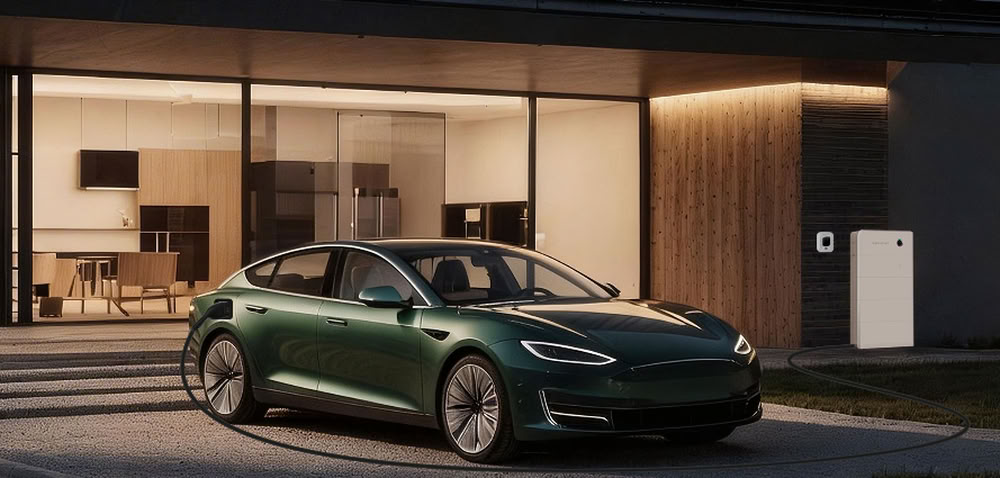
A typical American household burns through about 29 kilowatt-hours of electricity on an average day, according to the U.S. Energy Information Administration. Picture that as a fuel gauge: the fridge humming, lights on, a load of laundry, maybe an EV topping up overnight. The question almost everyone asks before buying a battery is the practical one — how much of that daily tank can a single home actually hold in reserve?
What the term really means
Solar battery storage is the practice of capturing the electricity panels produce but the house doesn’t immediately use, then parking it in a rechargeable battery for later — after sunset, during a peak-price window, or when the grid drops out. Most residential systems sold today run on lithium iron phosphate (LFP) cells, a branch of lithium-ion chemistry favored for long lifespan and stable behavior under heat, rather than the nickel-based cells common in laptops and EVs.
That chemistry shift is a big reason the economics have changed. Battery pack prices have fallen roughly 90% since 2010 and hit a fresh record low in BloombergNEF’s most recent price survey, with the industry-wide move toward LFP doing much of the work. Cheaper cells are part of why solar battery storage has gone from a niche add-on to something a mainstream homeowner can reasonably budget for.
Turning kilowatt-hours into real life
A kilowatt-hour — the unit batteries are rated in — is roughly the energy needed to run a 1,000-watt appliance for one hour. So a fully charged 10 kWh battery could keep a refrigerator, some lights, Wi-Fi, and phone chargers running for the better part of a day, provided the household is careful. Switch on central air or an electric dryer and that runway shortens fast.
Two caveats keep the real number honest. Batteries lose a little energy on the round trip in and out of storage, so usable capacity runs slightly below the headline rating. And draining a pack to absolute empty shortens its life, which is why systems hold a small buffer in reserve. LFP packs tolerate daily deep cycling better than older chemistries, but the rated kilowatt-hours are a ceiling, not a promise.
Most off-the-shelf home batteries land somewhere in the 10–14 kWh range. That’s enough to carry essential circuits through an evening or a brief outage, but not enough to forget the grid exists. The “how much” answer, in other words, depends heavily on what a home is trying to do.
So how much can one home store?
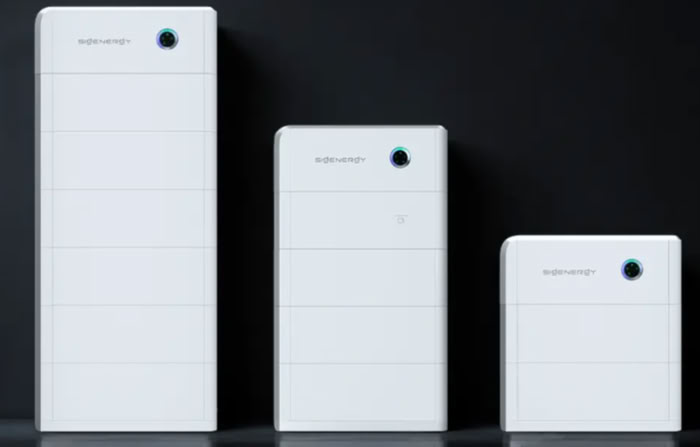
This is where modular design rewrites the math. Instead of one sealed box of fixed size, newer systems stack battery modules like blocks, so a household can start modest and add capacity as needs grow. Stackable LFP modules such as the BAT 6.0 and BAT 9.0 hold 6.02 and 9.04 kWh each, and can be built up to roughly 54 kWh in a single tower — enough to cover well over a full day of average use, or to nurse critical loads through a multi-day blackout.
A rough sense of scale:
| Setup | Usable capacity | What it roughly covers |
| Single module | ~6–9 kWh | Essentials for an evening |
| Mid-size stack | ~24–30 kWh | About a full day of average use |
| Full stack | ~54 kWh | Several days of backup |
Goals decide the target. Shaving a time-of-use bill takes less stored energy than carrying a whole house through repeated outages, and adding an EV to the mix pushes the ceiling higher again. Pairing storage with smart backup control — the kind that switches over to battery power in milliseconds and lets a homeowner pick which circuits stay live — turns raw capacity into something the household can actually steer.
For anyone weighing how much is enough, it’s worth seeing how a single integrated cabinet that bundles the inverter, battery, and energy management scales from a few kilowatt-hours up to a whole-home reserve — then deciding where on that spectrum a particular roof, budget, and outage history really belong.